



Plastic Injection Molding
Get custom plastic parts within days. Request an online quote.
Certification
ISO 9001:2015
Jump to Section
→ Capabilities
→ Matières
→ Surface Finishes
→ Quality Inspections
→ About Plastic Injection Molding
What is Plastic Injection Molding?
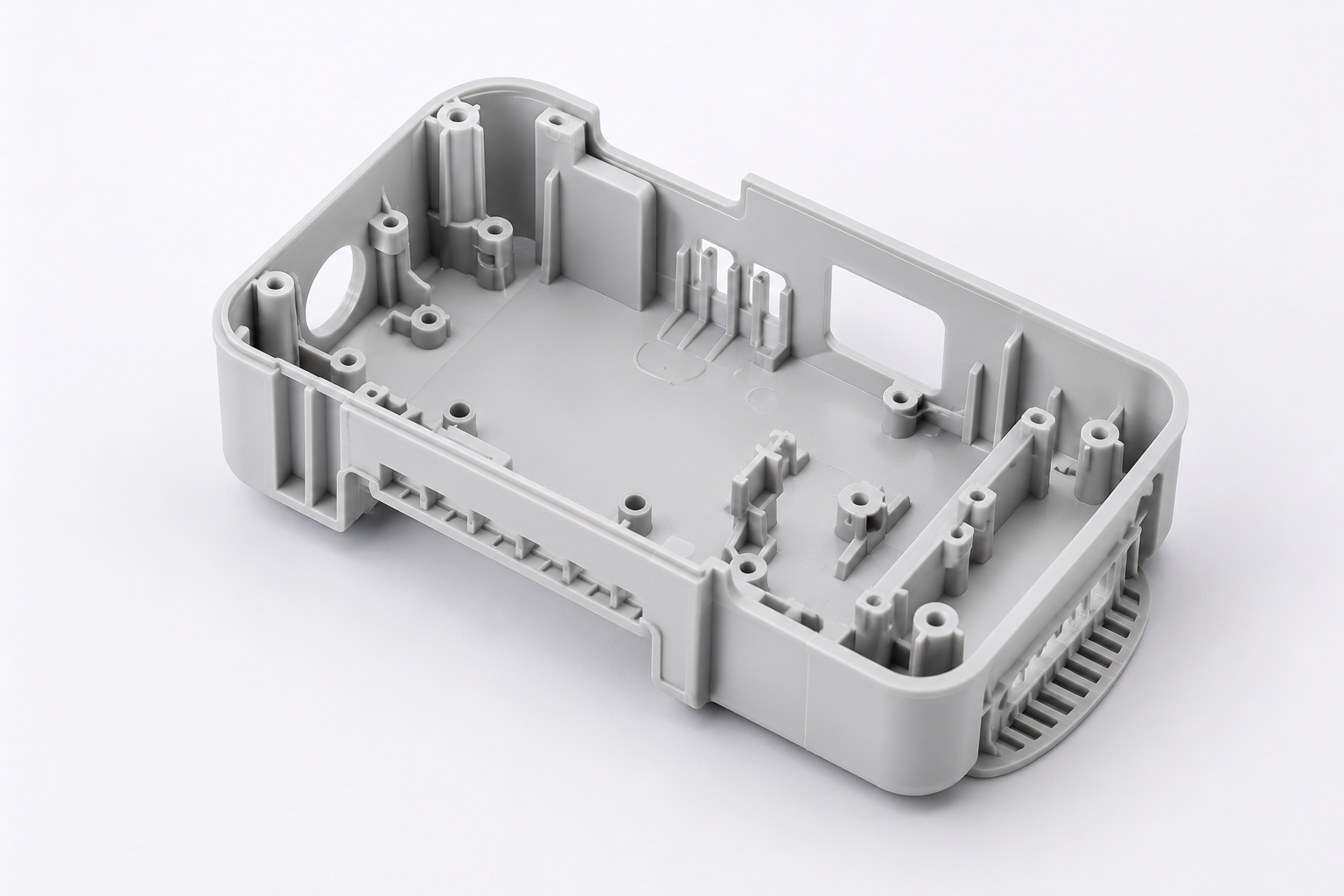
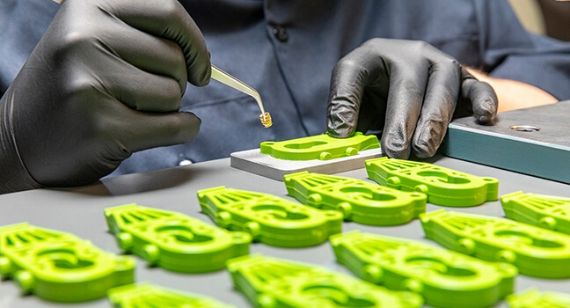
Injection molding is a highly efficient manufacturing process that creates plastic parts by injecting molten resin into a precision metal mold. Once cooled, the material solidifies into durable, high-quality components with excellent consistency and surface finish.
With minimal material waste and low per-part costs at higher volumes, injection molding is the preferred solution for producing custom plastic parts across industries including medical, automotive, electronics, and consumer products.
From rapid prototypes to mass production, our injection molding service delivers custom parts in as little as 1 day.
Typical Applications of Plastic Injection Molding Include:
- low-volume production
- bridge tooling
- pilot runs
- functional testing and prototyping
Plastic Molding Capabilities
Our basic guidelines for plastic injection molding include important design considerations to help improve part moldability, enhance cosmetic appearance, and reduce overall production time. View our design guidelines page for more details.
| US | Metric | |
| Size | 18.9 in. x 29.6 in. x 8 in. | 480mm x 751mm x 203mm |
| Volume | 59 cu. in. | 966,837 cu. mm |
| Depth | 4 in. from parting line | 101mm from parting line |
| Up to 8 in. if parting line can pass through the middle of the part | Up to 203.2mm if the parting line can pass through the middle of the part | |
| Projected Mold Area | 175 sq. in. | 112,903 sq. mm |
Tolerances: Typically, Protolabs can maintain a machining tolerance of +/- 0.003 in. (0.08mm) with an included resin tolerance that can be greater than but no less than +/- 0.002 in./in. (0.002mm/mm).
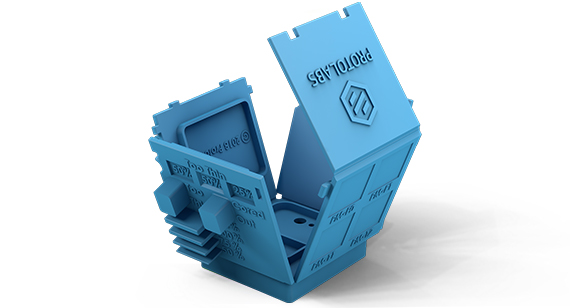
Grab a Design Cube
Want to learn more about injection molding? Sign up to receive a Design Cube. This physical aid demonstrates how to properly design features commonly found on molded parts.
Thermoplastic Matières
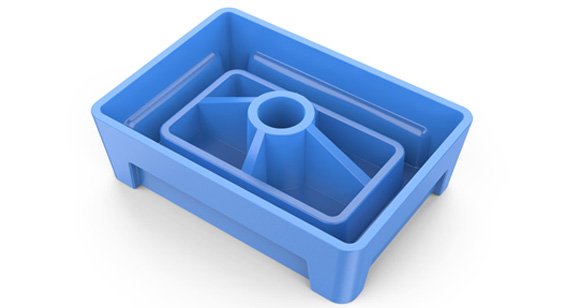
Choose from over 100 engineering-grade thermoplastic and thermoset materials for both prototyping and production applications. Looking for an alternative material? Explore our resin substitution guide for ABS, Polycarbonate (PC), Polypropylene (PP), and other widely used molding materials.
- ABS
- ABS/PC
- Acetal
- Acetal Homopolymer/Delrin
- ETPU
- HDPE
- LCP
- LDPE
- LLDPE
- Nylon
- PBT
- PC/PBT
- PEEK
- PEI
- PET
- PETG
- PMMA (Acrylic, Plexiglas)
- Polycarbonate
- Polypropylene
- PPA
- PPE/PS
- PS
- PSU
- TPU
Surface Finish Options
Draft angle requirements will vary by requested finish. Industry standard Mold-Tech finishes are also available.
| Finish | Description |
|---|---|
| PM-F0 | non-cosmetic, finish to Protolabs' discretion |
| PM-F1 | low-cosmetic, most toolmarks removed |
| PM-F2 | non-cosmetic, EDM permissible |
| SPI-C1 | 600 grit stone, 10-12 Ra |
| PM-T1 | SPI-C1 + light bead blast |
| PM-T2 | SPI-C1 + medium bead blast |
| SPI-B1 | 600 grit paper, 2-3 Ra |
| SPI-A2 | grade #2 diamond buff, 1-2 Ra |

Quality Inspections and Finishing Options for Custom Molded Parts
Every project has unique performance, appearance, and quality requirements. That's why we provide comprehensive inspection and finishing services to ensure your molded parts meet exact specifications from prototype through production.
Quality Inspections available for on-demand manufacturing order
· Design for Manufacturability (DFM) Feedback
· Scientific Molding Process Validation
· In-Process CMM Measurement and Machine Monitoring
· First Article Inspection (FAI)
· GD&T Compliance and Process Capability Reporting
Finishing Services
|
|
How Plastic Injection Molding Works?
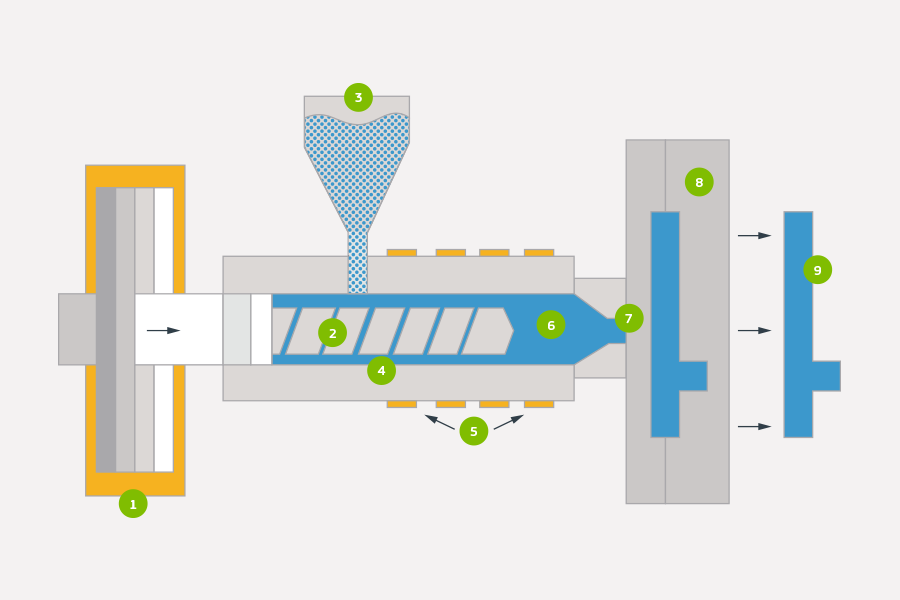
- Material Feeding – Plastic pellets are loaded into the molding machine.
- Melting – The resin is heated until it becomes molten plastic.
- Injection – The material is injected into a precision mold under high pressure.
- Cooling – The plastic cools and solidifies inside the mold cavity.
- Ejection – The finished part is ejected from the mold.
- Finishing – Optional secondary operations and inspections are completed before shipment.

Get an online quote and injection molding design analysis today.