



Liquid Silicone Rubber Injection Molding
Get custom silicone rubber parts within days.
Certification
ISO 9001:2015
Jump to Section
→ Capabilities
→ Materiali
→ Surface Finishes
→ Quality Inspections
→ About Silicone Rubber Molding
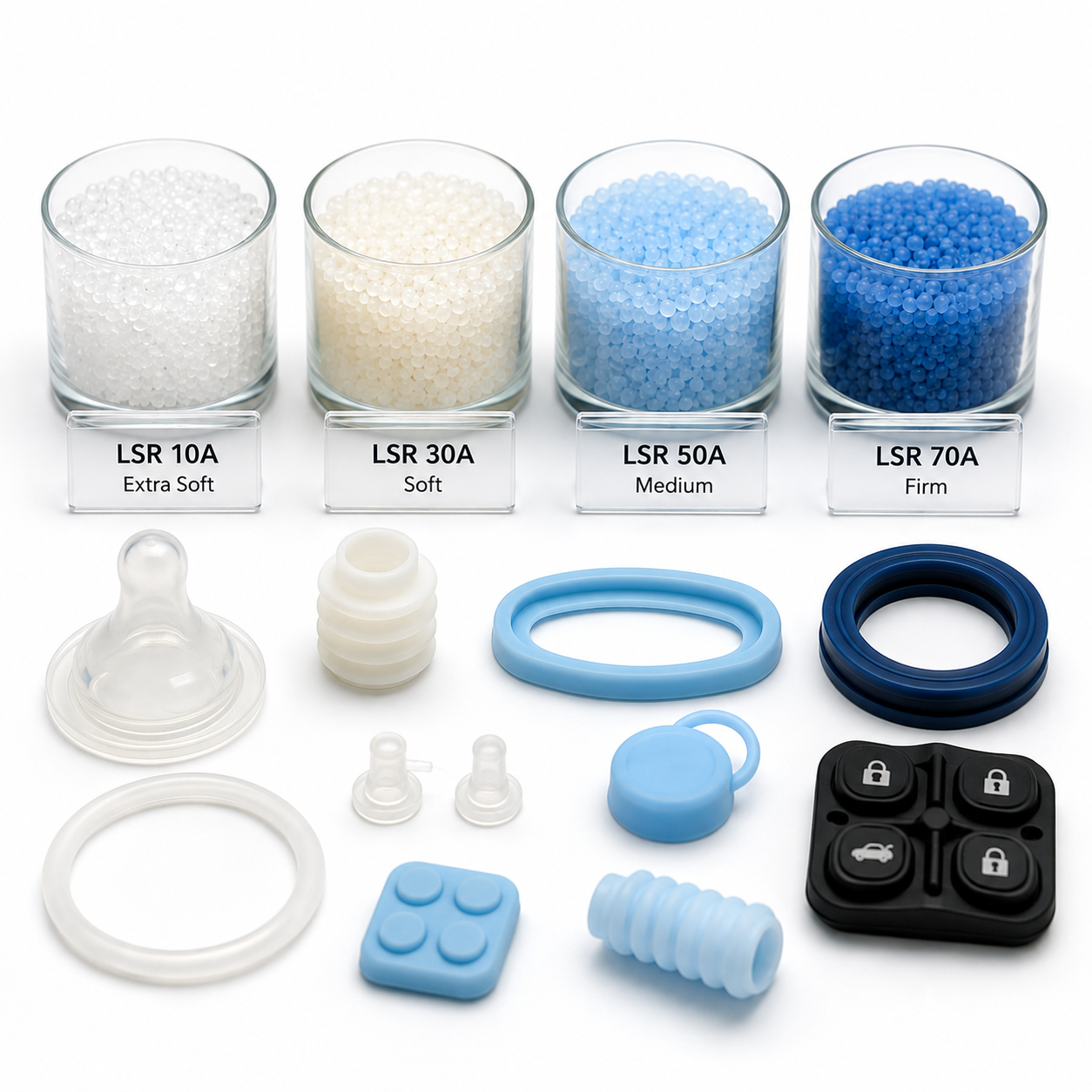
Our Liquid Silicone Rubber (LSR) molding process delivers custom prototypes and end-use production parts in as little as 15 days. Utilizing cost-efficient aluminum tooling and optimized manufacturing cycles, we provide fast turnaround times without compromising quality. We also offer a broad selection of LSR grades and durometers to meet diverse performance and application requirements.
Common applications for silicone rubber molding:
- low-volume production
- bridge tooling
- pilot runs
- functional prototyping
Liquid Silicone Rubber Molding Capabilities
Our basic guidelines for silicone rubber molding include important design considerations to help improve part moldability, enhance cosmetic appearance, and reduce overall production time. View our design guidelines page for more details.
| US | Metric | |
| Size | 12 in. x 8 in. 4 in. | 304.88mm x 203.2mm x 101.6mm |
| Volume | 13.3 cu. in. | 217,948 cu. mm |
| Depth |
No greater than 2 in. from any parting line; deeper parts are limited to a smaller outline |
No greater than 50.88mm from any parting line; deeper parts are limited to a smaller outline |
| Projected Mold Area | 48 sq. in. | 30968 sq. mm |
Tolerances: Protolabs can maintain a machining tolerance of +/- 0.003 in. (0.08mm) with a linear tolerance of +/- 0.025 in./in. (0.025mm/mm).
Surface Finish Options
| FINISH | DESCRIPTION |
|---|---|
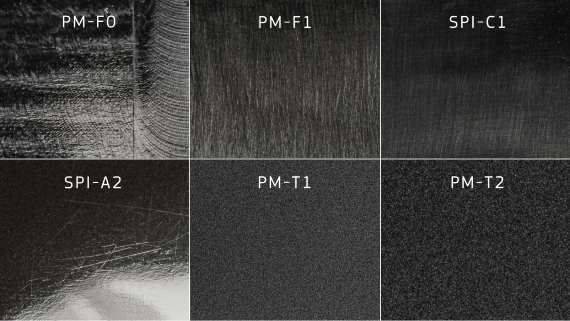
| PM-F0 | non-cosmetic, finish to Protolabs' discretion |
| PM-F1 | low-cosmetic, most toolmarks removed |
| PM-F2 | non-cosmetic, EDM permissible |
| SPI-C1 | 600 grit stone, 10-12 Ra |
| PM-T1 | SPI-C1 + light bead blast |
| PM-T2 | SPI-C1 + medium bead blast |
| SPI-B1 | 600 grit paper, 2-3 Ra |
| SPI-A2 | grade #2 diamond buff, 1-2 Ra |
Quality Inspections and Finishing Options
To meet the specific requirements of your silicone rubber applications, we offer a comprehensive range of quality inspection and finishing services to ensure consistent performance, precision, and product quality.
Quality Inspection Servizi Available for On-Demand Manufacturing Orders
· Design for Manufacturability (DFM) Feedback
· Scientific Molding Process Development Reports
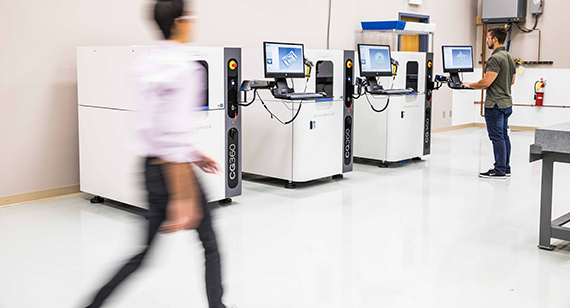
· In-Process CMM Inspection and Machine Monitoring
· First Article Inspection (FAI) Reports
· Process Capability Studies with GD&T Analysis
How Does Liquid Silicone Rubber Molding Work?
Liquid Silicone Rubber (LSR) molding is a highly automated manufacturing process used
to produce precise, flexible, and durable silicone components for medical, automotive, electronics, and consumer applications.
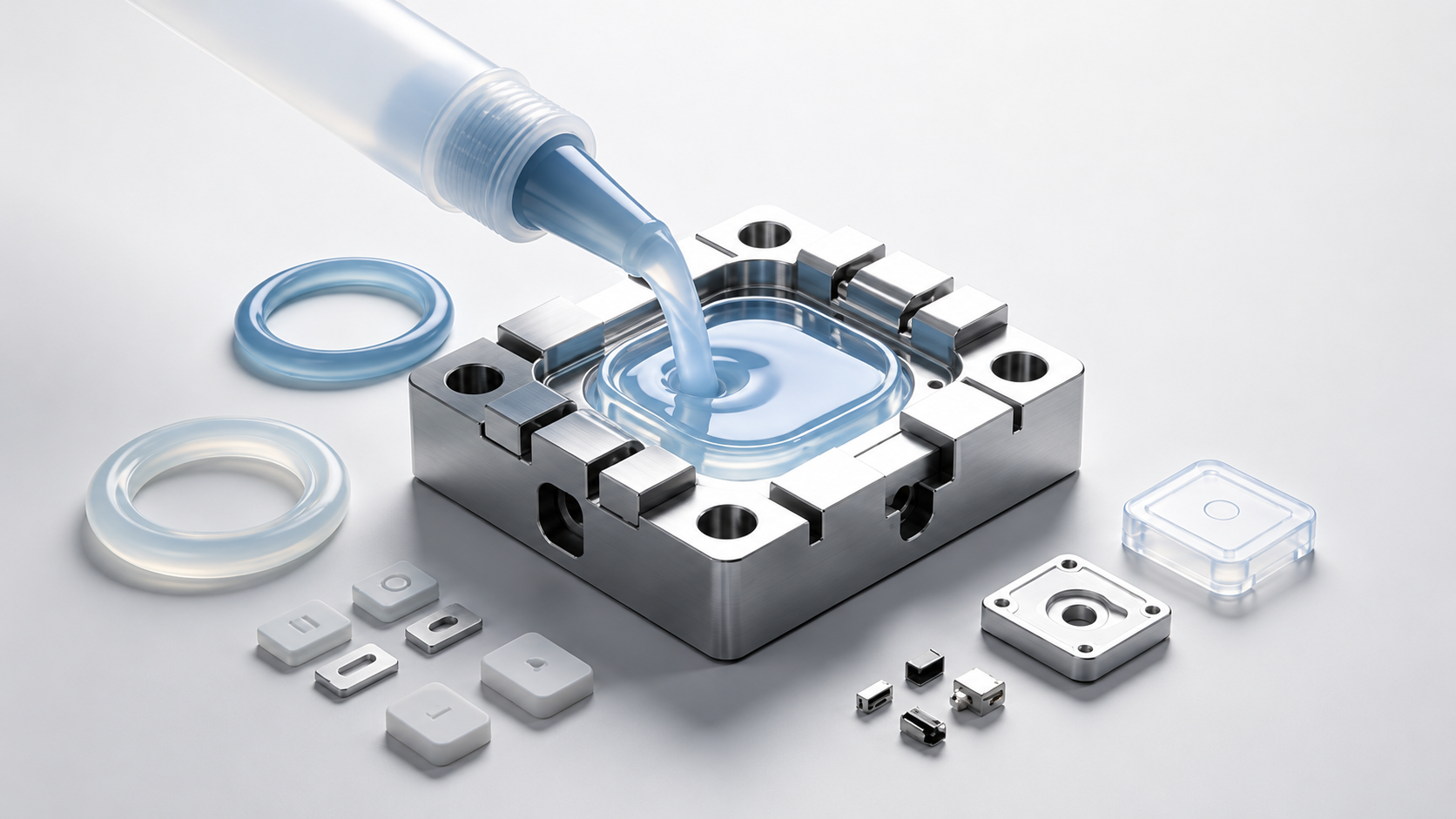
The process begins by mixing two-part liquid silicone materials, which are then injected under pressure into a heated mold cavity. Inside the mold, the silicone rapidly cures and solidifies into the desired shape. Once curing is complete, the mold opens and the finished part is automatically ejected, ready for post-processing or assembly.
The LSR Molding Process
1. Material Preparation
Two-component liquid silicone rubber (Part A and Part B) is accurately mixed with pigments or additives to achieve the required material properties and color.
2. Injection
The mixed LSR material is injected into a precision aluminum or steel mold under controlled pressure.
3. Curing
The heated mold rapidly vulcanizes the silicone material, transforming it into a flexible and durable elastomeric component.
4. Demolding
After curing, the mold opens and the finished silicone part is removed manually or automatically.
5. Secondary Operations
Additional processes such as trimming, inspection, assembly, or packaging are performed as required.
6. Quality Inspection
Finished parts undergo dimensional inspection and quality verification to ensure they meet performance and regulatory requirements.

Get an online quote and injection molding design analysis today.