



Insert Molding Service
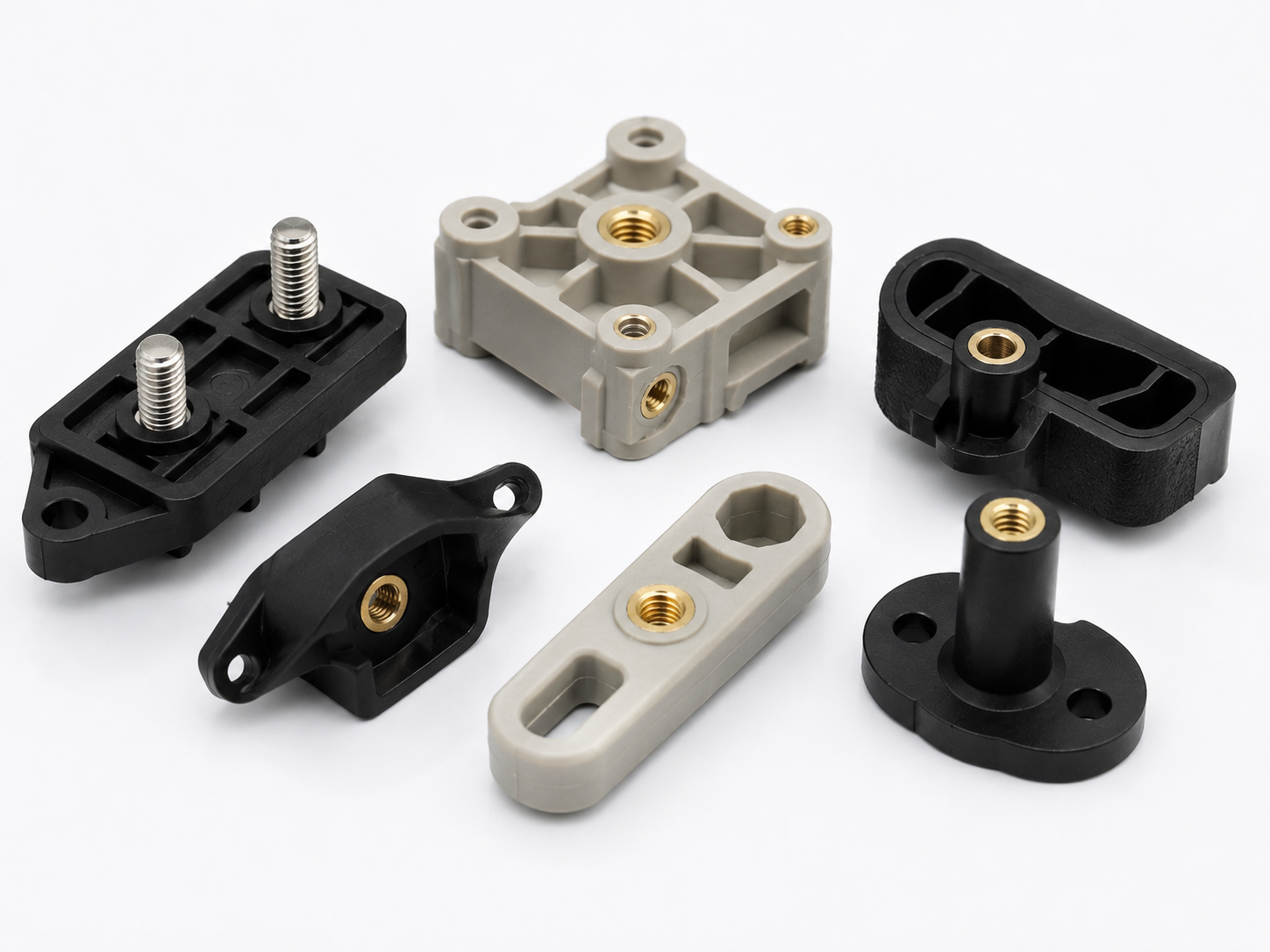
Get custom plastic parts molded with metal inserts. Upload a part to get an online quote.
Certification
ISO 9001:2015
Our insert molding process delivers custom prototypes and on-demand production parts in as little as 15 days. By utilizing cost-efficient aluminum tooling, we manufacture high-quality components using a wide range of thermoplastic and liquid silicone rubber (LSR) materials to meet diverse application requirements.
Insert molding is frequently used for:
- low-volume production parts
- bridge tooling
- pilot runs
- functional prototyping and testing
Insert Molding Design Guidelines
Our basic guidelines for overmolding and insert molding include important design considerations to help improve part manufacturability, enhance cosmetic appearance, and reduce overall production time.
| US | Metric | ||
| Maximum Part Size | 18.9 in. x 29.6 in. x 8 in. | 480mm x 751.8mm x 203.2mm | |
| Volume | 59 cu. in. | 966,837 cu. mm | |
| Depth | 4 in. from parting line | 101mm from parting line | |
| up to 8 in. if the parting line can pass through middle of part | Up to 203.2mm if the parting line can pass through middle of part | ||
| Projected Mold Area | 175 sq in. (plastic) | 112,903 sq. mm (plastic) | |
| 48 sq. in. (silicone rubber) | 30,958 sq. mm (silicone rubber) |
Additional Notes
- Minimum part volume is 0.025 cu. in. (40.98 cu. mm).
- With substrate molds, we can maintain a machining tolerance of ±0.003 in. (0.08mm) with an included resin tolerance that can be greater but no less than 0.002 in./in. (0.002mm/mm).
- With thermoplastic overmolds, tolerances remain the same as substrate molds, however, if the overmold is LSR, then tolerances shift to 0.025 in./in. (0.025mm).
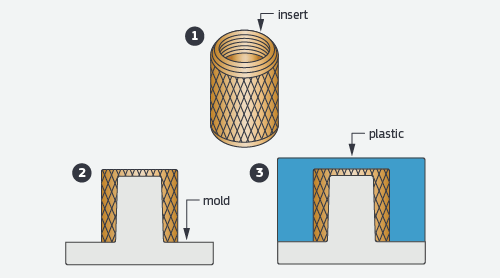
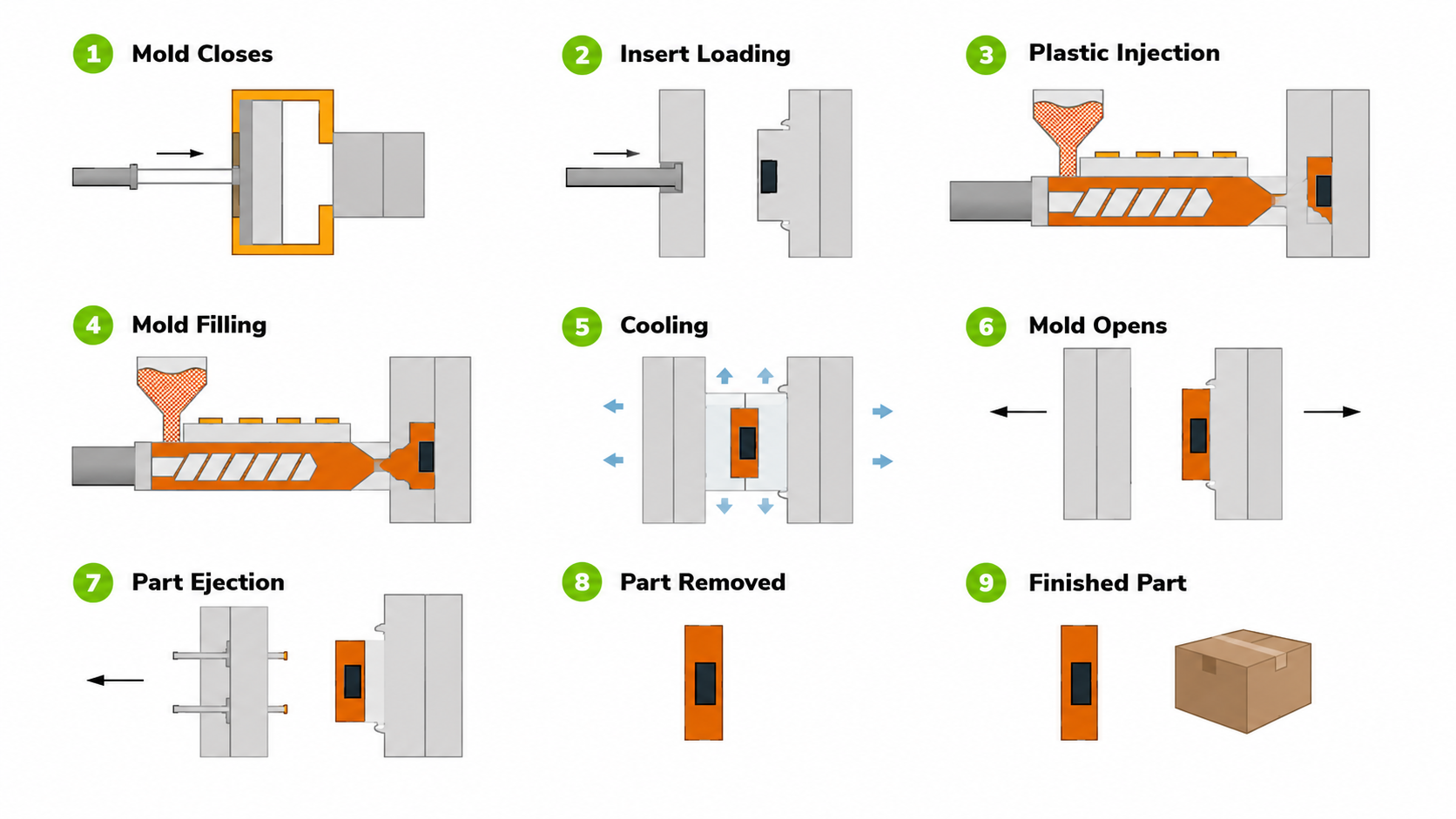
Unlike overmolding, which creates a final part using two separate molding shots, insert molding involves placing a preformed component—typically a metal insert—into the mold cavity before the plastic material is injected around it. This process creates a single integrated component with enhanced mechanical strength, durability, and functional performance.
What is Insert Molding?
Insert molding is a manufacturing process in which a preformed component—most commonly a metal insert—is placed into a mold and encapsulated with thermoplastic resin to create a single integrated part.
This process improves mechanical strength, assembly efficiency, and long-term durability, making it ideal for applications requiring threaded features, wear resistance, or structural reinforcement. After molding, the finished parts are inspected, packaged, and shipped to customers.

Get an online quote and injection molding design analysis today.