



Medical 3D Printing
Accelerate medical device product development and market introductions using additive manufacturing for rapid prototyping and low-volume production
認證與合規
ISO 9001:2015 | ISO 13485:2016 | ITAR






3D Printing Capabilities for Medical Device Development
Our diverse 3D printing processes support product development in healthcare and med-tech. We provide:
- Design for additive manufacturability (DfAM) with feedback on every quote
- Quality certifications: ISO 9001:2015, ISO 13485
- Vast capabilities and engineering expertise for, complex, and intricate part geometries
- Fast prototyping and production parts using industry-grade materials, such as high-temperature plastics, thermoplastics, and elastomeric materials
- Post-processing options such as heat treatment and vapor smoothing to improve mechanical properties

3D Printing Processes for Medical Applications
Direct Metal Laser Sintering (DMLS)Often known by the familiar phrase direct metal laser sintering, DMLS prints high-resolution parts to permit metal instrumentation design. DMLS makes it possible to design specialized, end-use surgical tools and have them in a surgeon’s hands within days. Moreover, cobalt chrome and titanium are ISO 13485 certified. |
 |
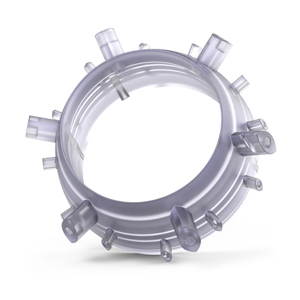
Stereolithography (SLA)SLA uses a UV laser to solidify resin held in a tank. If precision is important, SLA provides high accuracy and can yield features as small as 0.002 in. (0.051mm). SLA offers some unique material options, such as ultra-high resolution MicroFine™ in gray or green, and rugged Ceramic-Like Advanced HighTemp (PerFORM). Another option, True Silicone, can create parts that mimic the look and properties of liquid silicone rubber (LSR), but offers more geometric flexibility than possible with injection-molded LSR parts. |
 |
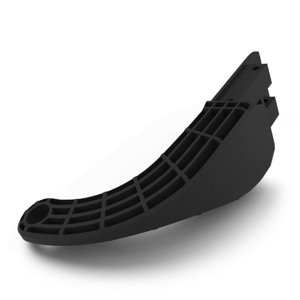
Multi Jet Fusion (MJF)MJF offers material versatility and creates complex, functional parts with highly isotropic properties. This process allows for printing of multiple parts within the same build. The end-use parts can include lightweight, yet strong, prosthetics that allow for sterilization and autoclaving. |
 |
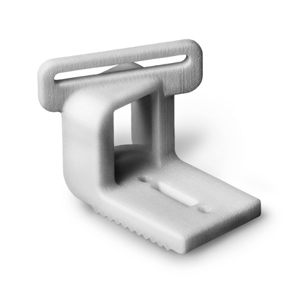
Selective Laser Sintering (SLS)SLS is not unlike its cousin DMLS in that it uses a laser to solidify powder in a bed, but the materials here are plastics. It produces accurate prototypes and functional production parts in as fast as 1 day using a variety of nylon materials and the thermoplastic, TPU. It quickly builds highly durable final parts in materials that exhibit heat resistance, chemical resistance, flexibility, and dimensional stability. Vapor smoothing is available as a post-processing option to eliminate rough surfaces and yield a glossy finish. |
 |
PolyJetThis process allows for the use of multiple colors or durometers in a single part build and can even do that within a single build layer. For the medical industry it makes sense when prototyping orthopedic implants and dental prostheses for fit-testing. You can even create soft grips on hard plastic surgical instruments. PolyJet can mimic various polymers, including liquid silicone rubber (LSR) and ABS, and can even simulate elastomers or flexible parts. |
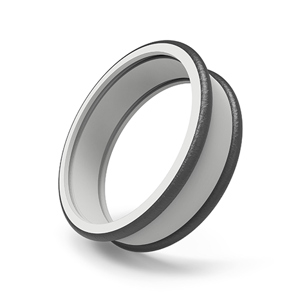 |
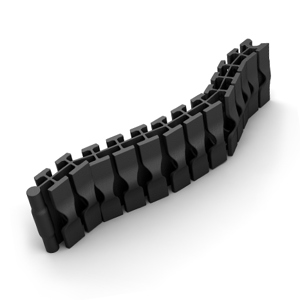
Advanced PhotopolymersHybrid PhotoSynthesis (HPS) parts have all the advantages of other 3D printing technologies, including the ability to create highly organic forms. HPS goes further, however, by offering greater speed than stereolithography, near-isotropic parts (equal strength along all axes), and high-resolution features using production-grade material. |
 |
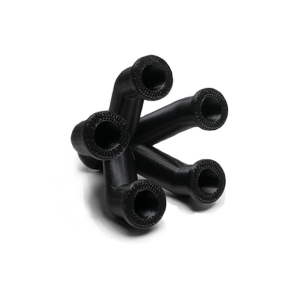
Fused Deposition Modeling (FDM)This fast, affordable technology directs heated thermoplastics through a nozzle to build parts. It offers a selection of material choices that address the needs of medical manufacturing, including biocompatibility, heat and chemical resistance, and more. It’s a great solution for custom prosthetics and anatomical models. |
 |
3D Printing 材料 for Medical Applications
| With dozens of materials to choose from, including ISO 13485-certified metals, and other unique options mentioned above, you can easily find the right material for your project. This chart compares the primary properties of each, highlighting the similarities and differences. |
Plastics and Elastomers


Metals


3D Printing Applications in the Medical Industry
| Thanks to advancements in additive manufacturing technologies, 3D printing is increasingly used across the medical industry, from testing new product concepts to manufacturing end-use components. |
Enclosures and Housings
3D printing allows for rapid prototyping and production of customized housings. This enables manufacturers to quickly iterate and test designs and produce intricate shapes other manufacturing methods cannot.
Internal Features
3D printing is an excellent choice due to its ability to fabricate complex, multi-layered internal channels and geometries with high precision. It offers a fast, cost-effective way to produce intricate microfluidic parts that require very fine, accurate structures.
Prosthetic Components
High-resolution 3D printing is ideal for medical parts with tiny internal channels, intricate geometries, and fine features. Transparent materials also make it possible to inspect internal pathways and evaluate fluid flow during product development.
Surgical Instruments
On-demand production of patient-specific and procedure-specific tools is a core use for medical 3D printing. It can improve surgical precision and efficiency, reduce costs, and allow for the development of specialized instruments with complex features not possible with conventional methods.
Medical Implants
Medical device manufacturers can develop implants for a range of applications, including cranial reconstruction, orthopedic procedures, spinal surgery, and maxillofacial reconstruction. Additive manufacturing makes it possible to produce complex, anatomically matched geometries without the constraints of traditional manufacturing.
Diagnostic & Lab Equipment
3D printing is used to manufacture housings for diagnostic devices, laboratory fixtures, sample holders, test adapters, and custom enclosures. High-resolution processes such as SLA can produce fine features and transparent parts for fluid-handling components, while durable nylon materials are well suited for functional prototypes and end-use equipment.
Anatomical Models
Patient-specific anatomical models help surgeons visualize complex anatomy, prepare for procedures, and communicate treatment plans. High-resolution 3D printing can accurately reproduce intricate structures, while transparent materials allow internal features to be viewed for planning and evaluation.
Related 資源


